
News & insights
From Complexity to Performance: Why Smarter System Design Matters
Modern Manufacturing Demands More Than Equipment That Simply Works
Industrial systems are expected to do more than keep production moving.
Today's manufacturers need equipment that performs reliably, operates efficiently, and supports long-term operational goals. As production demands increase, the focus is shifting away from simply maintaining existing equipment and towards improving how those systems perform.
In many cases, the greatest opportunities for improvement are not found by replacing an entire machine, but by rethinking how the control system and automation infrastructure are designed.
The goal is not simply modernization.
The goal is better performance.
Complexity Can Limit Performance
Many industrial systems evolve over time through repairs, modifications, and technology additions.
While these changes may solve immediate requirements, they can gradually increase system complexity.
As complexity increases, manufacturers may face challenges such as:
Greater maintenance requirements
Reduced system visibility
Increased mechanical wear
Difficult troubleshooting
Lower operational efficiency
Over time, complexity can become a barrier to reliability and performance.
This is why modern automation projects often focus on simplifying systems while improving functionality.
Better Control Creates Better Outcomes
One of the most effective ways to improve machine performance is through greater control of how equipment operates.
Modern drive technologies provide opportunities to manage machine movement with greater precision, allowing systems to accelerate and decelerate in a controlled manner rather than relying on abrupt starts and stops.
This delivers benefits beyond motion control alone.
Improved control can help reduce mechanical stress, minimise wear on critical components, and contribute to more stable operation across the production process.
The result is equipment that performs more efficiently while supporting longer-term reliability.
Performance Is Built Through System Thinking
The most successful automation upgrades do not focus on individual components.
They focus on the complete system.
Modern engineering considers how electrical infrastructure, drives, controls, machine operation, and maintenance requirements interact to support production objectives.
When systems are designed holistically, manufacturers can achieve improvements in:
Reliability
Maintainability
Operational efficiency
Equipment performance
Long-term asset value
This system-level approach creates a stronger foundation for future production requirements.
Turning Existing Assets into Modern Solutions
For many manufacturers, valuable production equipment still has years of useful life remaining.
The challenge is ensuring that the automation systems supporting that equipment continue to meet modern operational requirements.
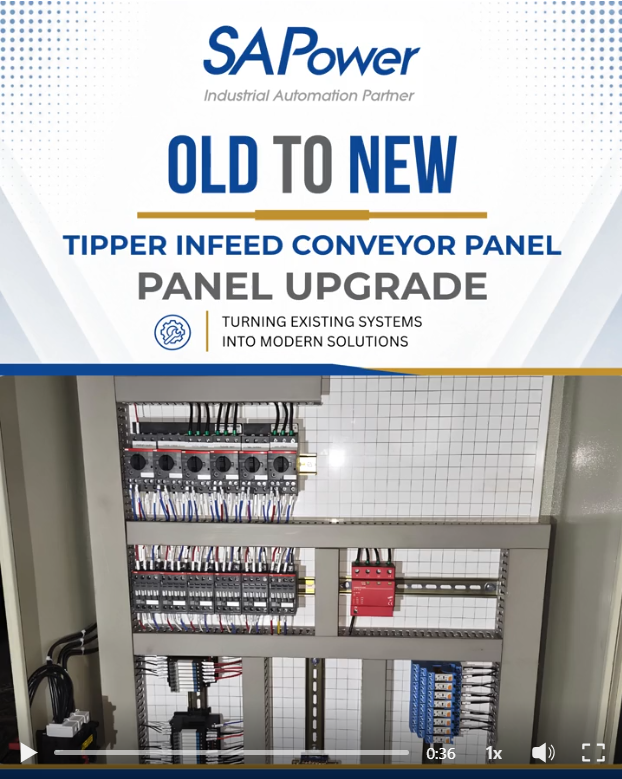
Thoughtful upgrades can transform ageing systems into more reliable, efficient, and maintainable solutions without replacing the entire asset.
The result is not simply a new control system.
It is a production environment better equipped to support future performance.
Building a More Efficient Future
At SA Power, we believe successful upgrades are about more than replacing technology.
They are about simplifying complexity, improving control, and creating systems designed around long-term reliability and performance.
Because the best modernization projects do not just change equipment.
They transform complexity into performance.