News & insights
Why Long-Term Supportability Is Becoming a Manufacturing Priority
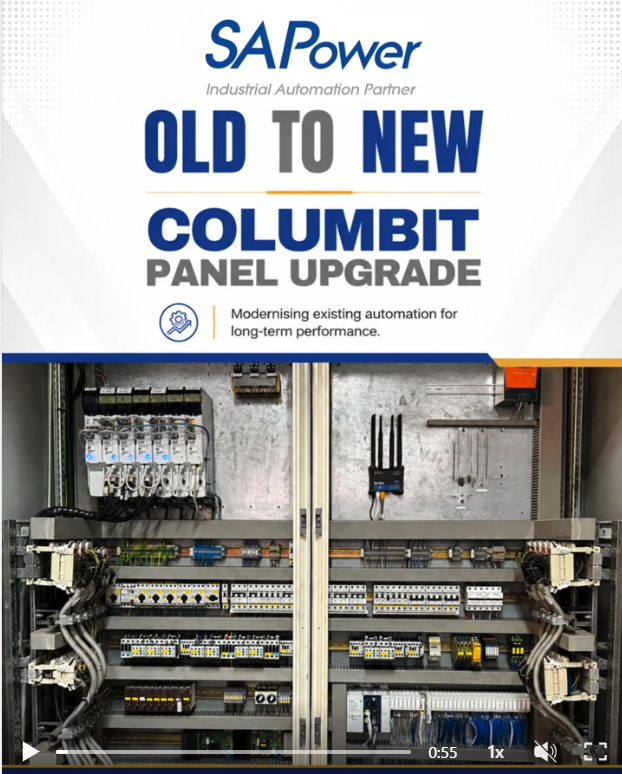
Modern Automation Is About More Than Replacing Technology
Industrial equipment is often designed to operate for many years, and in many cases, the mechanical assets continue delivering value long after the original automation technology has reached the end of its practical lifecycle.
As control systems, drives, operator interfaces, and supporting technologies age, manufacturers face a growing challenge. The issue is not always whether the machine can continue running. The question is whether the system can continue to be supported, maintained, and optimized effectively over time.
This is why modern automation upgrades are increasingly focused on more than technology replacement alone.
Today, manufacturers are looking for ways to improve reliability, strengthen performance, and ensure their systems remain supportable for years to come.
Reliability Requires Supportability
Traditionally, automation projects focused heavily on functionality. If the machine operated as required, the project was considered successful.
Modern manufacturing demands a broader perspective.
Reliable production is no longer determined solely by whether equipment runs. It is influenced by how easily systems can be maintained, diagnosed, supported, and adapted as production requirements evolve.
As technology becomes obsolete, businesses often encounter challenges such as:
Reduced availability of spare parts
Increased maintenance complexity
Limited access to technical support
Longer recovery times during faults
Difficulty integrating newer technologies
Over time, these challenges can increase operational risk and place unnecessary pressure on production teams.
Building Systems for Long-Term Performance
The most effective automation upgrades focus on creating a stronger foundation for the future rather than simply replacing ageing components.
Modern control systems, drives, operator interfaces, and support technologies allow manufacturers to improve the overall supportability of their operations while maintaining the value of existing production assets.
This approach helps create systems that are:
Easier to maintain
Simpler to troubleshoot
Better connected
More scalable
More reliable over their lifecycle
The outcome is not only improved operational performance but also greater confidence in the future support of the system.
Connectivity Changes the Way Support Is Delivered
As industrial technology continues to evolve, support is becoming more proactive, responsive, and connected.
Modern communication and remote access technologies provide new opportunities to assist with diagnostics, system monitoring, and technical support without relying solely on traditional on-site intervention.
This capability helps manufacturers respond faster to challenges, improve visibility into system performance, and reduce the impact of unexpected issues.
In many cases, better supportability can be just as valuable as improved machine performance.
Future-Ready Operations Require Future-Ready Thinking
Forward-thinking manufacturers are increasingly viewing automation investments through the lens of long-term operational value.
The objective is no longer simply to replace obsolete technology.
The objective is to create systems that can continue to perform, evolve, and be supported throughout their lifecycle.
When reliability, connectivity, maintainability, and supportability are considered together, automation becomes more than a technology upgrade. It becomes a strategy for long-term operational success.
Building for What's Next
At SA Power, we believe every automation upgrade should deliver more than new hardware. It should improve reliability, support long-term performance, and create a platform that can adapt to future operational requirements.
By combining modern control technologies, enhanced connectivity, and practical engineering expertise, we help manufacturers build systems that are easier to support, more reliable to operate, and better prepared for what comes next.
Because modernisation isn't just about replacing the past.
It's about ensuring your operation is ready for the future.